Tel: 020 7620 1818 email: cookandbutler@btconnect.com Company Number 05143672
Aldgate Ward Club
www.aldgatewardclub.org
Annual Luncheon
January 2019, The Livery Hall, Guildhall, London


ALDERSGATE
Aldersgate is a ward of the City of London. named after a
gate which was situated 1,265 feet south west of Cripplegate, and was,
according to the opinion of Stow, one of the twelve original gates of the
City. The first gate was built by the Romans during the 2nd or 3rd
centuries, and the road through it probably linked up with Watling Street,
which ran between Dover and St Albans. Some think that it was constructed
after the city wall, possibly as a replacement for the north gate of the
fort.
Its name is open to interpretation. Some believe that the name alludes to
the seniors or old men by whom the gate was built, or to the great number of
Alder trees which formerly grew in the neighbourhood. Maitland observed that
its antiquity is by no means implied in the meaning of the word Alder, but
thought that either of these derivations was more probable than that which
was conferred upon it on account of its age. Alder is also a Saxon word
derived from Aldrich, which in turn is derived from Ealdred (meaning 'old
and wise counsel') so another interpretation is that it is simply the Gate
of Ealdred. Either way it would appear that Aldersgate only acquired its
name in the late Saxon period. and was probably referred to differently by
the Romans.
In 1335 it was resolved that the gate should be covered with lead and a
small house made under it for the gatekeeper. Later the room above became
the workshop of John Day, printer of The Folio Bible ( 1549), Foxe's Book of
Martyrs ( I563), Roger Ascham's Scholemaster (1570) and Tyndale's Works
(1572). Day built considerably on the wall of the City towards the parish
church of St Anne.
In 1603 James I entered London through it for the first time as king.
However, by 1616 the general condition of Aldersgate had deteriorated so
badly that the Lord Mayor, Alderman and Common Council ordered it to be
demolished. It was rebuilt the same year to a design by Gerard Christmas, in
no small part due to William Parker, a Merchant Taylor who had bequeathed
£1,000 towards the expense of a new edifice.
In a large square over the arch of the gate was the figure of James I on
horseback, in the same posture as when he made his entry through the gate in
1603 on his journey to take possession of the Crown. Above his head were
quartered the arms of England, Scotland and Ireland (see front cover and
above illustrations circa 1620 and 1650 respectively).
In 1660 Samuel Pepys recorded seeing the limbs of traitors on the gate.
Aldersgate was damaged during the Great Fire of 1666. but was repaired and
beautified, at the expense of the City, in l670 during the mayoralty of Sir
Samuel Stirling.
The apartments over the gate were appropriated to the use of the Common
Crier of the City; and by the sides of the gate were two posterns for the
convenience of foot passengers. Aldersgate, which stood opposite of what is
now No. 62 Aldersgate Street, was demolished in 1761. However, a
representation remains in the north-end stained glass window of the Old
Library at the Guildhall.

Annual Luncheon
January 2018, The Livery Hall, Guildhall, London


Annual Luncheon
February 2017, The Livery Hall, Guildhall, London


More photos from this event can be viewed at the
Aldersgate Ward Club Annual Luncheon 2017 web page.
Annual Civic Luncheon
January 2016, The Livery Hall, Guildhall, London


More photos from this event can be viewed at the
Aldersgate Ward Club Civic Luncheon 2016 web page.


Annual Luncheon
January 2015, The Livery Hall, Guildhall, London


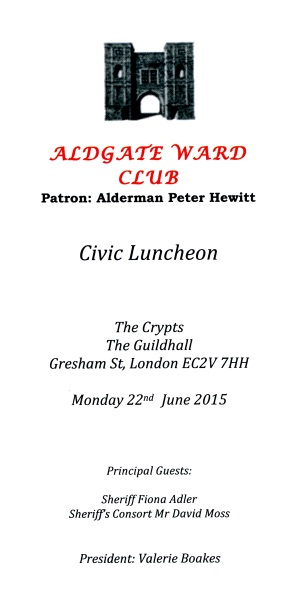
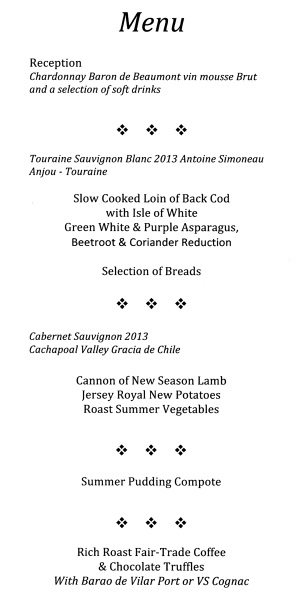
Civic Luncheon
July 2015, The Crypts, Guildhall, London

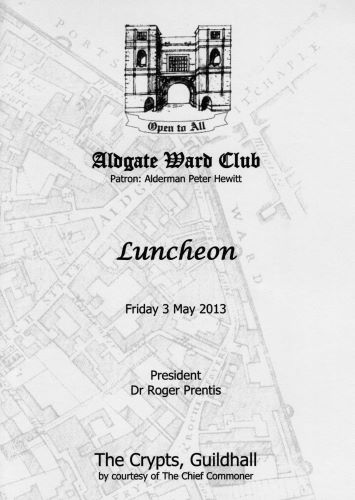
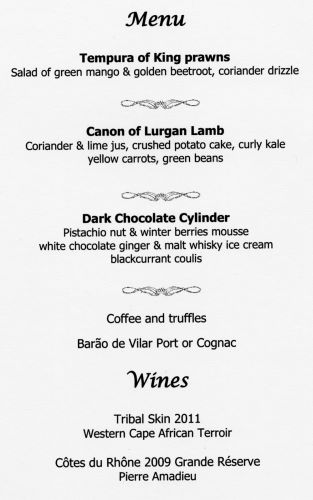
Luncheon
May 2013, The Crypts, Guildhall, London